
2026 FIFA World Cup: Red Card System In Disarray Over Trump, FIFA & Balogun Decision (pics)
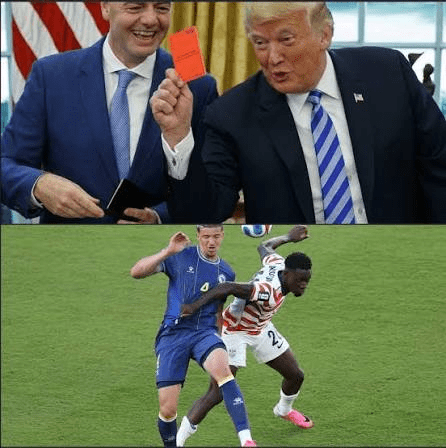
It had become one of the game’s great certainties. If you are sent off at the World Cup, you will miss the next game.
No ifs, no buts, no appeals.
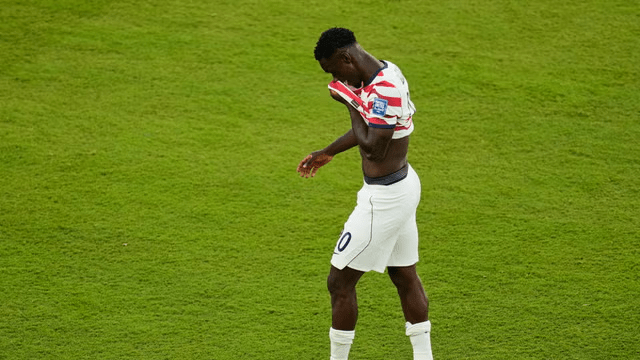
The decision to effectively overturn the red card shown to United States’ star forward Folarin Balogun leaves many unanswered questions.
Balogun, sent off in the last-32 win over Bosnia-Herzegovina, will now be available to play in the last 16 against Belgium on Monday. He’s the US’s top scorer at the tournament with three goals.
There have been 189 red cards in the history of the World Cup, and only two players have not served a suspension.
The other came in 1962, when Brazil’s Garrincha was sent off against Chile in the semi-final, but played in the victory over Czechoslovakia in the final.
Back then, however, there was no automatic ban. It was decided by committee with evidence given by the officials.
The Fifa disciplinary committee’s decision in 1962 was shrouded in allegations of political interference, external.
Given the well-established close relationship between the White House and Fifa, questions will be asked because of what is a highly unusual decision in favour of the co-hosts.
The BBC’s US media partner CBS News has confirmed that Balogun’s reinstatement came after US president Donald Trump called Fifa president Gianni Infantino on Thursday and spoke about the suspension, sources familiar with the call told CBS News.
Does it set a footballing precedent, too?
Why has Balogun been given a reprieve, but the other 11 players sent off at this World Cup have all served a suspension?
Will it lead to more appeals in football in a bid to cut suspensions even when red cards were justified under the rules?
When it says “misses next match” on the television coverage following the World Cup’s next red card, should we not be so sure it happens?
Here, we break down the decision, what we know and the possible repercussions.